


Living by Your Own Work
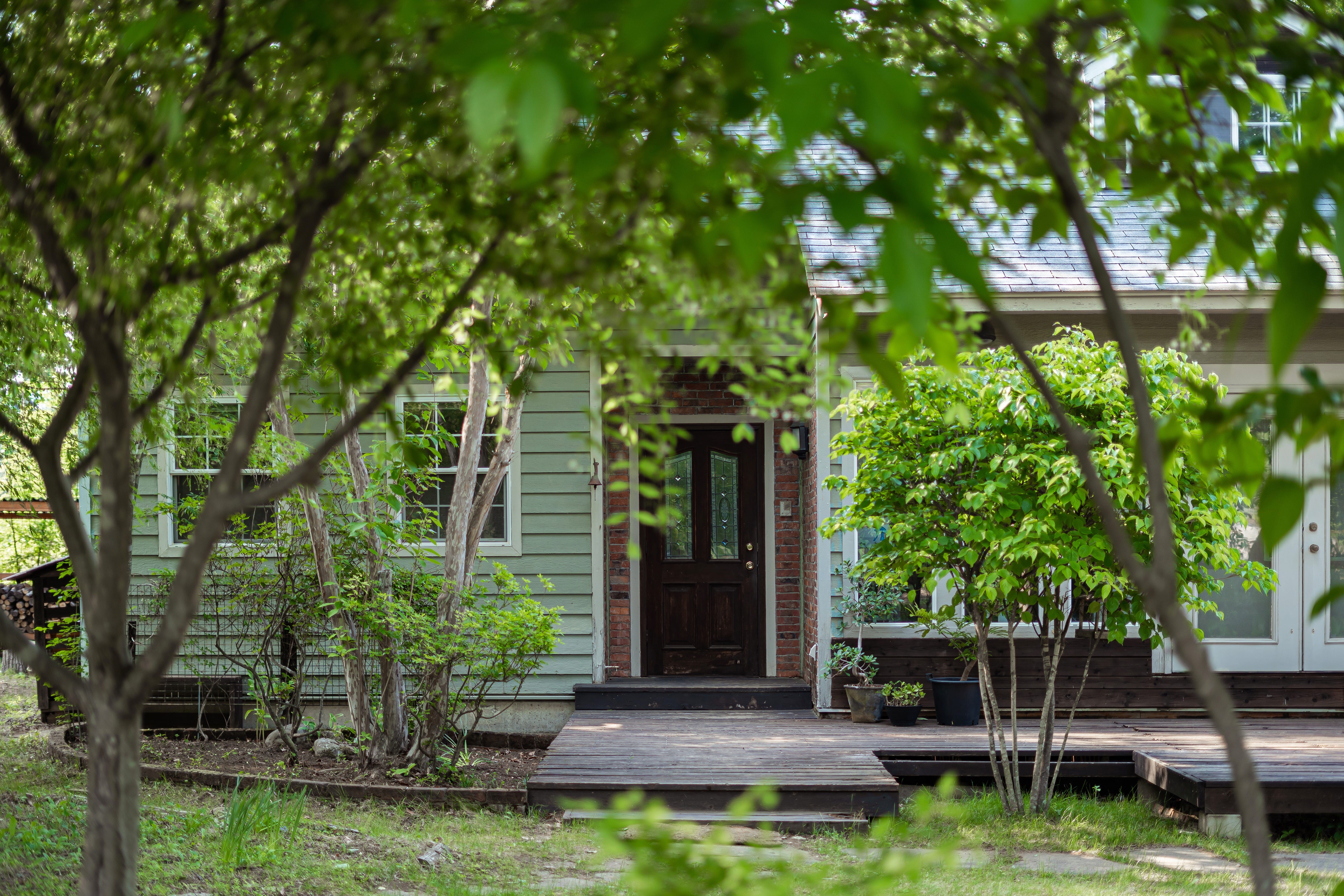
Half past five in the morning. The ridgeline of the Southern Alps still holds the color of night.
In a room where my family is still sleeping, I make a coffee and begin to write. Nothing is pulling at me. I set down the first line in my own time. In tennis there is a single moment when the game is yours to begin — the serve. This quiet hour is my serve.
I’m Yuki Hattori, a designer who runs a small web studio, alone, from the foot of the mountains in southern Japan.
Said plainly, it sounds settled. The line that brought me here was not.
When I first entered working life, I couldn’t fit the things everyone around me treated as obvious. My body refused the ready-made shape. It wasn’t a lack of ability; the standard issue simply wasn’t cut for me — that’s how I’d put it now.
I poured that friction into music. What I couldn’t say in words, I could let out in sound. In time, web design drew me in — but no one in Japan would hire someone with no experience, so I looked overseas and landed in Bali. Those three years became the root of the work I do today. They were vivid. And still I couldn’t tell: was I moving toward freedom, or away from something?
I came home and went out on my own. Design turned out to be a language that suited me, and in the daily work of giving other people’s problems a shape, a living slowly took root. It was never smooth. Nights awake, unable to read next month’s income. A project gone the day before its deadline. Freedom always kept the company of its shadow, instability.
Still, I kept asking the same question: how do I actually want to live?
The answer was quiet and unglamorous. Keep more than one source of income. Know the true shape of what a life costs. Build a system no larger than your own body — and tend it. Years of plain trial and error, nothing more. But on the far side of it, something surfaced: I get to choose.
There is an old idea in Japan — taru wo shiru, to know what is enough. Not the chase for more, but the recognition that you may already have arrived at enough. It’s easy, almost anywhere, to measure a life by how much it gathers. I’ve slowly learned to measure mine by how little I need in order to feel free. That quiet reversal is the center of everything here.
I called this way of living Self-Sufficiency 2.0. Not vegetables in a field, but the system of income and daily life, grown by hand. The tool changed from a hoe to a laptop; the principle — make it yourself, fill it yourself — did not.
These mornings, there is another presence in the study. AI.
This isn’t a story about passive income or earning in your sleep. AI is a partner to think against, a pair of hands that moves when I ask. But what to make, and what to choose, stays with me. Tools, not masters. Tending, not hustling.
I’ve been running a small experiment — laying nature sounds recorded here at the foot of the mountains over beats made with AI, to make quiet music to work by. Body and machine, joined. A small thing, but proof of how far one person, working alone, can reach.
I wrote all of this down as a book and published it in Japan, in Japanese. What you’re reading now is my attempt to carry it across the water — to send it out in English, a letter at a time. Not a finished method. A record of an experiment still underway, written honestly: what worked, and what didn’t.
If something in the way you live now feels slightly out of tune, this letter, arriving at dawn, might become a seed.
From the foot of the Southern Alps, quietly. Yuki Hattori
